Ford Office Ride – B2B and B2C Commute App
Designing Ford’s Office Ride App and Admin portal and Driver’s App from fragmented tools to one scalable experience
Role
Duration
Tools
Team

Overview and Statement
As the global population grows, more people are moving into cities. And the way they move around their cities is changing faster than ever. Ford Mobility designs, grows and invests in emerging mobility services and connectivity solutions. Our aim is to deliver new transport initiatives and address urban transportation challenges. Using technology, innovation and a collaborative approach, we want to improve the way people and goods move.
5,000+
Active Commuters
50+
Routes
4
User personas
Problem Statement
Ford needed a mobile and web experience that let users in both B2B and B2C to complete scheduling their daily commute without the friction of choosing their boarding point and arrival time.
The existing experience was fragmented across tools and inconsistent across platforms, which created a lot of commute errors, drop-off and increased support tickets.
Mobility apps face several challenges impacting their usability and effectiveness.
Accurate real-time data is a major issue, discrepancies in vehicle locations and arrival times can frustrate users and erode trust.
Complex navigation within the app often confuses users, especially in high-stress situations.
What I Led
Set the design direction and UX strategy across mobile and web to define a consistent visuals and experience
Ran stakeholder alignment with Ford's product and engineering teams and conducted interviews and focus groups to finalise key KPIs
Structured the design process: discovery, wireframes, prototyping, testing, handoff and usability testing and post launch enhancements.
Reviewed and directed the work of 3 designers on the account and Managed all the delivery and walkthrough at client end.

What I Designed
Mapped the end-to-end user journey across both platforms and defined user persona’s with definitive workflows.
Intuitive Dashboard Design ensure users can easily navigate to information and tools.
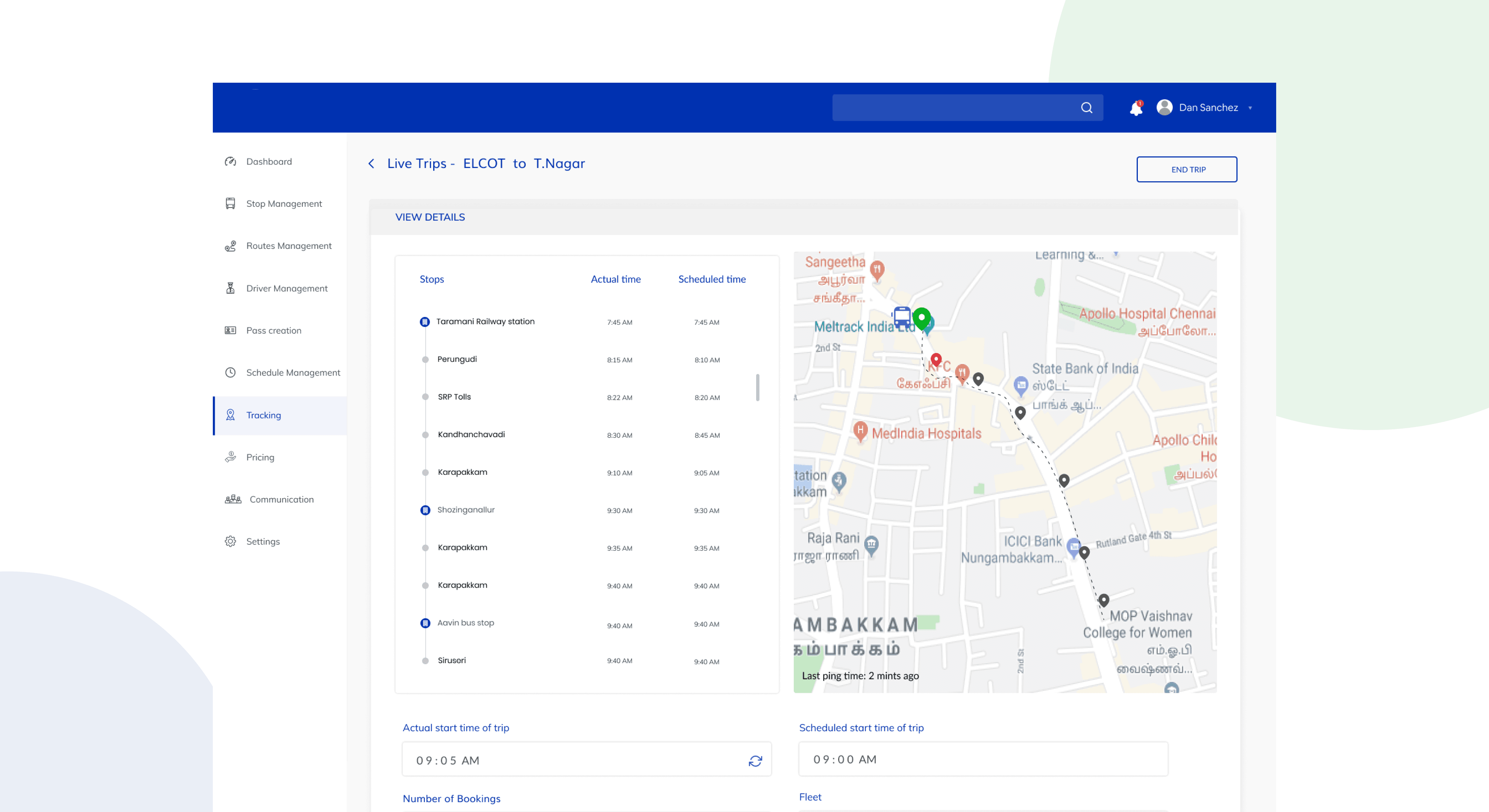
Real-time Vehicle Tracking
Simplified Navigation for new users to help them understand how to use the app effectively
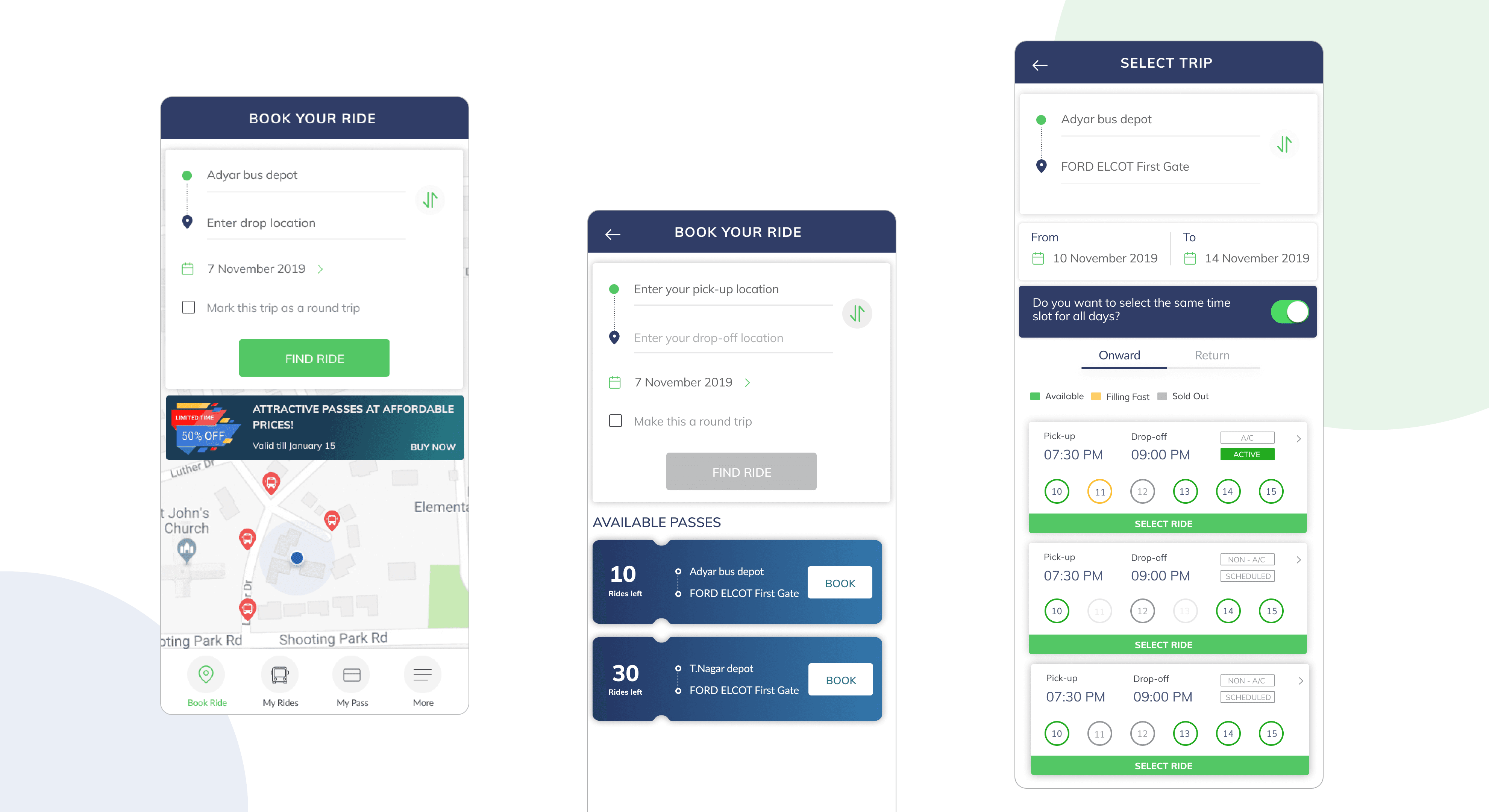
Designed the core flows: Onboarding, Scheduling bus routes, Booking system and Offers management and QR process.
Designer for both B2B and B2C application with business and end user in mind .
Built a shared component set so mobile and web stayed visually and behaviorally consistent
Ran usability testing and iterated based on findings
Key Decisions & Trade-Offs
Real-time data: Showed a confidence range (e.g. "~4 min") instead of a falsely precise ETA and sacrificed polish to protect user trust when GPS data was uncertain.
Boarding point selection: Defaulted to the 2-3 nearest fixed stops, with custom pickup one tap away and traded some flexibility for faster decisions and fewer boarding errors, since most commuters use the same stop daily.
B2B and B2C in one app: Built a single core scheduling flow with a B2B layer (billing, manager-assigned routes, bulk scheduling) on top, instead of two separate apps — took on more permissioning complexity to avoid re-fragmenting the experience.
Navigation under stress: Used progressive disclosure and showed only the next action by default, full route on demand and so power users needed one extra tap, but high-stress users weren't confused by full route detail upfront.
Recurring commutes: Let users save a "usual commute" that auto-fills boarding point and time and required more upfront data modeling, but removed the two most repeated friction points for daily riders.
Support tickets: Pushed proactive delay/change alerts instead of waiting for users to ask and required investing in a notification system, but pre-empted most "where is my ride" tickets before they were raised.
Arrival time input: Let users set an arrival-by window instead of an exact departure time, with the system calculating the boarding time and gave up some manual control in exchange for matching how people actually think about commuting, and fewer self-calculation errors.
Output to evaluate


Impact
80%
Improvement in booking
25%
On boarding drop-off
90%
Improvised verification
Boarding accuracy: QR scan boarding cut wrong-bus boardings by 90%, replacing manual driver checks with a verified scan-in for every rider.
Support ticket volume: Proactive delay/change alerts plus real-time confidence indicators reduced "where is my ride" tickets by 80% within a month.
Cross-role adoption: Delivered a complete three-sided solution and Customer, Driver, and Admin apps and used by 5000+ daily commuters and 450+ drivers across 25+ routes/fleets.
Operational visibility: The Admin app gave dispatch/ops teams live visibility into boarding, delays, and route adherence, cutting manual coordination time by 90%
Commute scheduling speed: Saved "usual commute" plus arrival-window scheduling cut average booking time from 20 to 5 seconds and featured the Monthly pass for easier purchase and commute.
B2B efficiency: Corporate/fleet accounts could bulk-schedule and manage employee commutes centrally, reducing per-employee admin overhead by 75%.
Driver-side impact: QR scan and route/stop clarity reduced boarding disputes and dwell time at stops by 88%, improving on-time performance across the route.
Trust and retention: 98% increase in repeat weekly usage and increase in user satisfaction score, tied directly to the accuracy and notification fixes above.
Leadership Moment
QR scan boarding and the saved-commute feature both moved through stakeholder review without much resistance — the real fight was over the real-time data issue. I pushed back on shipping with unreliable live tracking, even under deadline pressure, because I knew inaccurate ETAs would undercut trust in every other feature we'd built. I held that line through several rounds of debate with the product and engineering teams, working through what "good enough" real-time accuracy actually meant and what we'd need to hit it. We resolved it before launch, and the app went live successfully with QR-scan boarding, saved commutes, and monthly pass purchases included in the same release.

